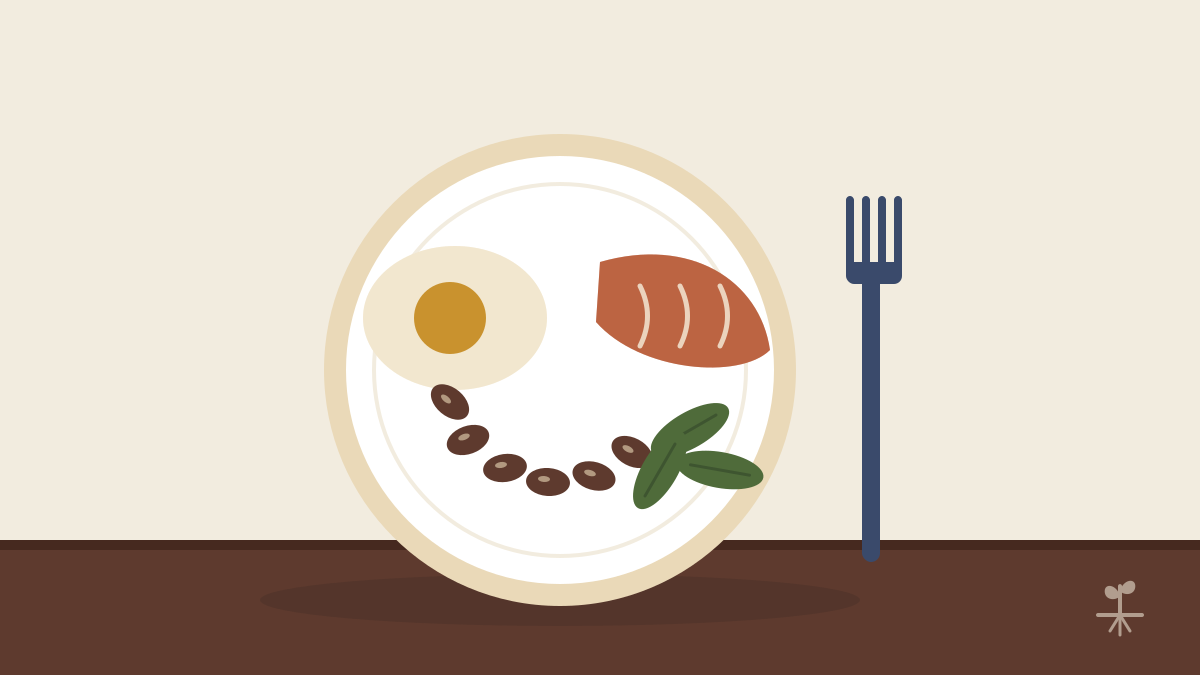
Picture a common day of eating for someone in their late fifties. Toast and coffee at breakfast. A salad or a sandwich at lunch. A proper dinner with meat or fish, potatoes, and vegetables. It is a perfectly respectable pattern, and it has a quiet flaw: almost all of the day's protein arrives in the last meal, at exactly the stage of life when the body has become less efficient at using it.
Protein has been so thoroughly claimed by the fitness world that it can feel like a topic for people in gym clothes. It is not. After 50, protein is mostly a question of independence: of keeping the muscle that carries groceries, climbs stairs, and catches you when you trip. This article is about how much is reasonable, why the timing may matter, and what that looks like in an ordinary kitchen.
Why protein matters more with age
Muscle is constantly being broken down and rebuilt. Eating protein, particularly its building blocks called amino acids, signals the body to rebuild. In younger adults, a modest amount of protein triggers a strong rebuilding response. In older adults, the same amount produces a weaker one. Researchers call this anabolic resistance, and it is one reason muscle is lost gradually from midlife onward, a process described in our article on strength training.
The practical consequence is that older muscle seems to need a clearer signal: a somewhat larger portion of protein at a time, and ideally a portion at more than one meal, before the rebuilding machinery responds. Combined with the reduced appetite that many people experience with age, this is how a person can eat "normally" and still slowly lose strength.
How much is enough
The Recommended Dietary Allowance for protein, set by the National Academies and reflected in the Dietary Guidelines for Americans, is 0.8 grams per kilogram of body weight per day for adults. For a person weighing 150 pounds, which is about 68 kilograms, that works out to roughly 55 grams a day. For a person weighing 200 pounds, about 91 kilograms, it is roughly 73 grams.
Two things are worth knowing about that number. First, it is a floor, defined as the amount that meets the needs of nearly all healthy people, not an optimum. Second, a good deal of research in older adults suggests that intakes somewhat above the allowance may better support muscle maintenance, especially when combined with strength training. The exact amount is still debated, and this article does not propose a number beyond the official one. The point is simply that the allowance is a minimum, and that many adults over 50, particularly those with small appetites, are not reaching it.
There are important exceptions. People with chronic kidney disease are often advised to limit protein, and anyone with kidney or liver disease, or who is managing another chronic condition, should ask a clinician or a registered dietitian before eating more. This is a case where personal advice matters more than general guidance.
Why spreading it out may help
Because older muscle responds to a clearer signal, the pattern of eating most of the day's protein at dinner has a drawback: breakfast and lunch may fall below the amount needed to trigger rebuilding, and dinner may deliver more than the body can use at once. Some research suggests that distributing protein more evenly across the day's meals, with a solid portion at each, may support muscle protein synthesis better than the same total eaten unevenly.
This is not a rule that requires weighing food. It is a nudge toward asking, at each meal, "where is the protein on this plate?" For most people the answer at dinner is obvious and the answer at breakfast is "there is none."
What a day of ordinary food looks like
The following is not a diet. It is an illustration of how protein can appear at every meal using foods that are already in most kitchens.
Breakfast
Two eggs, scrambled or boiled, with toast. Or a bowl of plain Greek yogurt or cottage cheese with fruit and a handful of nuts. Or oatmeal made with milk rather than water, topped with peanut butter or chopped nuts. Any of these turns a low-protein breakfast into a meaningful one.
Lunch
A sandwich with a real filling: tuna, chicken, egg, or hummus and cheese. A bowl of lentil or bean soup. Last night's dinner, which is often the most efficient lunch there is. A salad with a can of beans or a piece of salmon added.
Dinner
This is the meal most people already handle well: fish, poultry, meat, tofu, or a bean-based dish, with vegetables and a grain or potato. The one change worth considering is portion size: if dinner has been carrying the whole day, it can shrink a little now that breakfast and lunch are pulling weight.
Snacks
For people with small appetites, snacks are where the day's total gets rescued. A piece of cheese, a boiled egg, a small tub of yogurt, a handful of almonds, or a glass of milk all contribute in a way that crackers or fruit alone do not.
Plant, animal, or both
Animal foods such as eggs, dairy, fish, poultry, and meat are concentrated sources of protein and contain all of the amino acids the body cannot make. Plant foods including beans, lentils, peas, soy foods such as tofu and edamame, nuts, seeds, and whole grains also supply protein, and eating a variety of them across the day covers the full range of amino acids. The Dietary Guidelines for Americans describe both patterns as healthy, and many people find a mix easiest: beans and lentils for lunch, fish or eggs at another meal.
Two practical notes for plant-forward eaters over 50. First, plant sources tend to deliver protein in larger volumes of food, which can be a challenge for small appetites; soy foods and lentils are among the more concentrated options. Second, dairy, if tolerated, is one of the easiest ways to add protein without adding much bulk.
Appetite, teeth, and other real obstacles
Advice to "eat more protein" often ignores why people are not doing so. Appetite tends to decline with age. Dental problems make meat harder to chew. Cooking for one is discouraging. Some medications change taste. A few practical responses:
- Smaller meals more often are easier than three large ones for a small appetite.
- Soft, moist protein foods such as eggs, fish, yogurt, cottage cheese, lentil soup, and slow-cooked meat are easier to manage with dental issues.
- Batch-cooking a pot of beans, a tray of chicken thighs, or a dozen boiled eggs on one day supplies several days of low-effort meals.
- Milk, whether dairy or fortified soy, is a drinkable protein source for days when eating feels like a chore.
A word on powders and shakes
Protein powders and ready-made shakes are everywhere, and this site does not recommend or review products. It is fair to say that most adults can meet their protein needs from food, that food brings other nutrients along with the protein, and that anyone considering a supplement, particularly with a chronic condition or on medication, should ask a clinician or dietitian first. Food first is not a slogan here; it is simply the approach with the fewest unknowns.
Protein does not work alone
The clearest signal for older muscle is protein plus resistance. Eating well without ever asking the muscles to work does much less than doing both. The two-days-a-week strength guideline described elsewhere on this site is the other half of this article. Together, on a schedule, over years, they are among the most reliable ways an adult over 50 can hold onto the strength that ordinary life quietly requires.