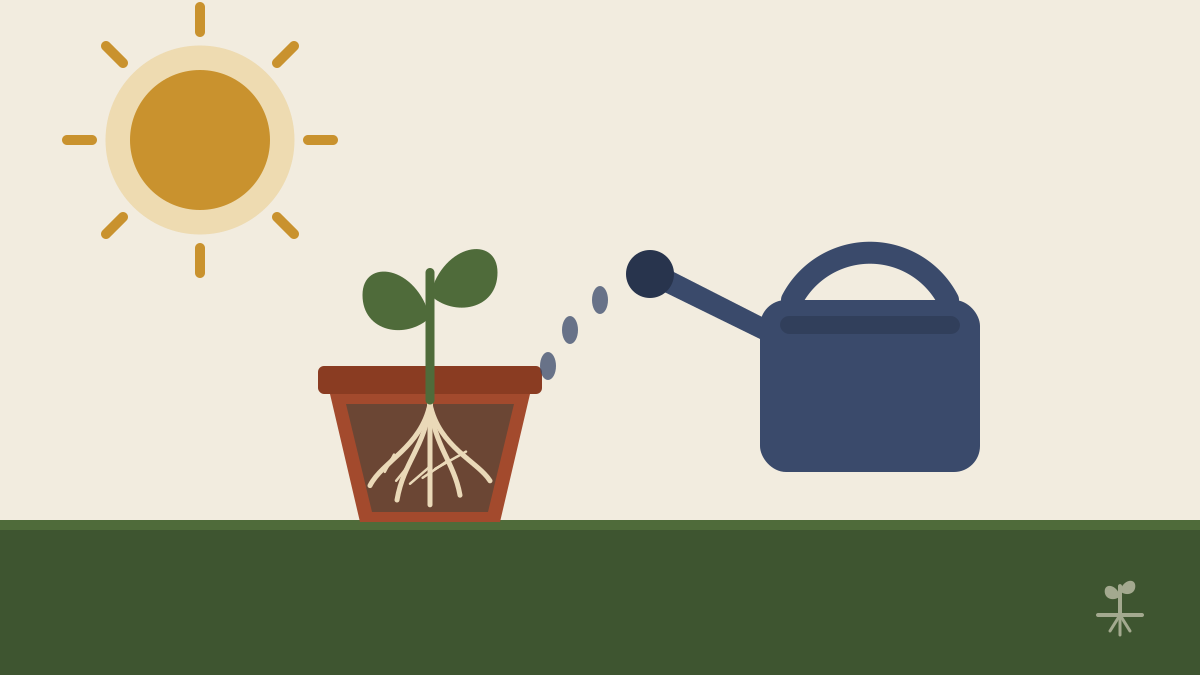
A Day With Shape: Why Routine Matters More After Retirement
When the calendar empties, sleep, meals, movement, and mood can drift with it. Structure is not about being busy. It is about giving the body clock and the mind something to hold on to.
Most of what shapes health after 40 happens in ordinary hours: how you sleep, move, eat, think, and stay connected. Daily Root explains what the research actually says about those habits, in plain language, so you can decide what is worth doing.
When the calendar empties, sleep, meals, movement, and mood can drift with it. Structure is not about being busy. It is about giving the body clock and the mind something to hold on to.
Age-related hearing loss arrives so slowly that most people blame the mumbling. Research increasingly links unaddressed hearing loss to withdrawal, strain, and cognitive change, which makes a hearing test one of the more useful midlife errands.
It has no marketing budget and no flavor of its own, yet fiber shows up in nearly every guideline about digestion, heart, and blood sugar. Here is how to get more of it without overhauling your kitchen.
Standing on one foot is not a party trick. Balance fades when it is not used, and it can be rebuilt at any age with a few minutes of practice a day and some attention to the house you live in.
We organize everything we publish around five areas of daily life that research keeps pointing back to. Pick the one that matters to you today.
How sleep changes with age, and the routines that still help.
2 articlesStrength, balance, and everyday activity that keeps the body capable.
2 articlesPractical nutrition for real kitchens, without fads.
2 articlesAttention, memory, mood, and the habits that support them.
2 articlesRelationships, hearing, routine, and the shape of a good day.
2 articlesEvery article ends with a list of the public health institutions and academic medical centers it draws on.
Our sourcing rulesWe say "may help" when the evidence says "may help." No promises, no hype, no countdowns.
Health disclaimerOur articles are editorial work. Advertising and sponsored content, when they appear, are labeled and kept apart from what we write.
Advertising disclosureLarge type, high contrast, a text-size control, and nothing that interrupts reading. Designed for eyes that have been reading for decades.
AccessibilityPublic health agencies now talk about social connection the way they talk about sleep and exercise. Here is what the research suggests, why midlife is a common turning point, and small ways to rebuild a circle.
Few things feel as lonely as being wide awake in a dark house. Here is what tends to cause it after 50, what makes it worse, and how to handle the hour so it does not swallow the next day.
Losing your keys is not the same as forgetting what keys are for. A plain guide to the memory changes that come with age, the signs that deserve a check-up, and what to do in the meantime.
The body becomes less efficient at turning food into muscle with age. That makes protein, and how it is distributed across the day, a practical kitchen question rather than a bodybuilder's one.
Muscle quietly declines from midlife onward, and it is the tissue most tied to independence. The public guidelines ask for two sessions a week. Here is how to make that realistic in an ordinary life.
Lighter, earlier, more interrupted: the shifts in sleep that come with age are real. Most of them are normal, and a handful of daily habits still make a difference.