Somewhere in the fifties, many people notice that sleep has quietly changed its terms. Bedtime arrives earlier than it used to. The night has more seams in it: a trip to the bathroom, a stretch of staring at the ceiling, a dog or a neighbor or a thought. And the morning begins at an hour that would have seemed absurd at 30, often before the alarm, sometimes before the sun.
It is tempting to read all of this as a problem to be solved or, worse, as a sign of decline. Most of it is neither. Sleep really does change with age, in ways that public health institutions describe consistently. Understanding what is shifting, and what is not, makes it far easier to decide which habits are worth keeping and when it is time to ask for help.
What actually changes
Three things tend to happen to sleep across the decades after 40, and they happen to most people to some degree.
Sleep gets lighter. The deep, slow-wave stage of sleep, the one that feels most restorative, occupies a smaller share of the night as people age. More of the night is spent in lighter stages, from which it is easier to wake. That is why a sound that would not have registered at 25 now pulls you fully awake at 55.
Sleep gets more fragmented. Brief awakenings are part of everyone's night, at every age. With age they become more frequent and more likely to be remembered. Some of that is the lighter sleep just described; some is the body itself, since the bladder, joints, and temperature regulation all have more to say at night than they once did.
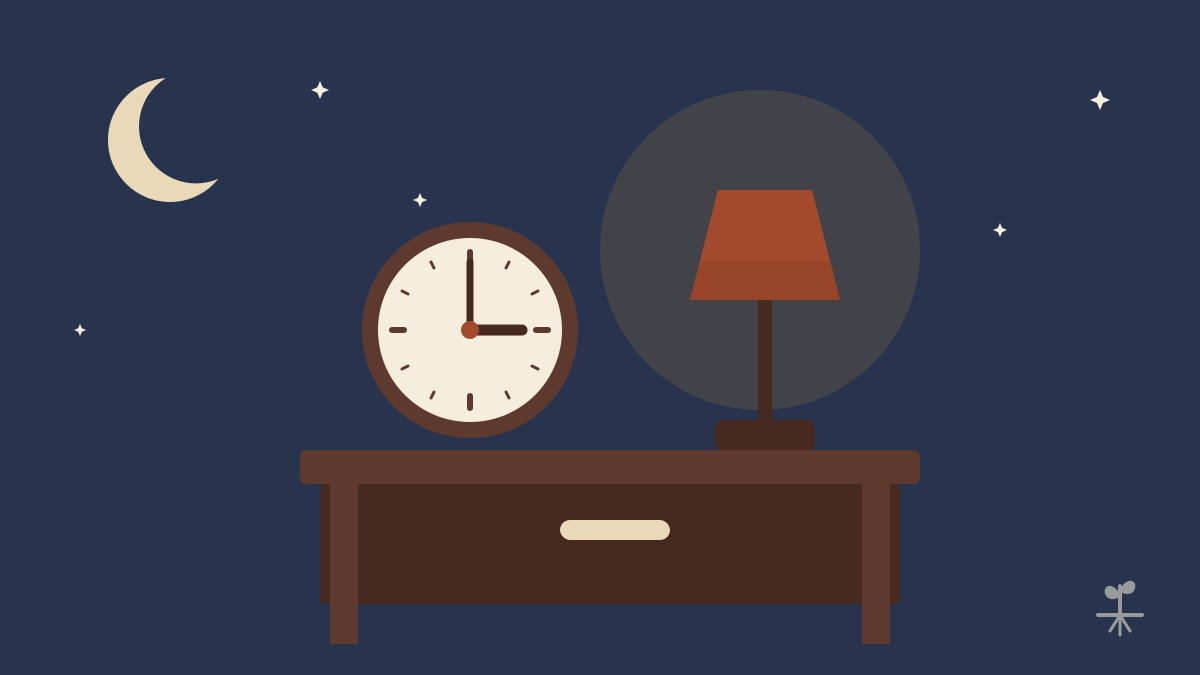
The clock moves earlier. The internal circadian rhythm, the roughly 24-hour cycle that tells the body when to be alert and when to wind down, often shifts toward earlier hours with age. Sleepiness arrives sooner in the evening; wakefulness arrives sooner in the morning. This is why the 9:30 p.m. yawn and the 5 a.m. alertness so often show up together. They are two ends of the same shift.
None of these is a disease. They are the ordinary texture of an aging sleep system, and the National Institute on Aging describes them as expected changes rather than disorders.
What does not change
The need for sleep is the part that stays put. Public health guidance from the Centers for Disease Control and Prevention places the adult need at seven or more hours a night, and that guidance does not carve out an exception for people over 60. The popular idea that older adults "need less sleep" appears to be a misreading of the fact that older adults often get less sleep. Getting less and needing less are different things.
What changes is how much deliberate effort it takes to get those hours. At 30, seven hours may have happened by accident. At 60, they are more likely to be the result of a routine.
Why it is worth the effort
Sleep is not a passive pause between days. During the night the brain consolidates memory, the body regulates hormones that govern appetite and blood sugar, and the immune system does maintenance work that does not happen as well while awake. The National Heart, Lung, and Blood Institute lists a long roster of health concerns associated with ongoing sleep deficiency, including heart disease, high blood pressure, and problems with mood and concentration.
For people over 50 there is a more immediate reason: a tired body is a clumsier body. Poor sleep is associated with slower reaction times and reduced attention, which matters when the task is a flight of stairs or a car on a wet road.
What still helps
The advice that follows is unglamorous, and that is rather the point. It is the set of habits that sleep researchers and clinicians return to again and again because they work with the aging sleep system instead of against it.
Anchor the morning, not the night
If you change only one thing, make it a consistent wake-up time, seven days a week, including the weekends. The circadian clock takes its strongest cue from when you get up and see light, not from when you go to bed. A fixed wake time steadies the whole rhythm; bedtime then tends to sort itself out. Sleeping in to "catch up" feels reasonable but often pushes the clock later, which makes the next night harder.
Get daylight early
Morning light is the signal the clock listens to most. Ten to twenty minutes outdoors within an hour or two of waking, even on an overcast day, may help keep the rhythm steady. A walk to the mailbox or coffee on the porch counts. Indoor light is far weaker than most people assume.
Move during the day
Regular physical activity is associated with deeper, more consolidated sleep. The timing matters less than people fear; for most adults, exercise in the evening does not disturb sleep, though a very intense session right before bed may make it harder to wind down. The important thing is that the body has done something during the daylight hours.
Watch the afternoon
Caffeine has a long tail, and many people find they become more sensitive to it with age. A cup at 3 p.m. can still be at work at 9 p.m. Many people over 50 find that moving the last coffee to before noon changes the night more than any bedtime ritual does. Alcohol is the other afternoon-and-evening culprit: it may bring sleep on faster, but it tends to fragment the second half of the night, exactly the part that is already fragile.
Start the wind-down before the bedroom
The body needs a runway. Dimming the lights in the last hour, putting screens down, and doing something quiet and repetitive (reading, a puzzle, dishes) gives the clock the evening cue it needs. Bright light late in the evening, especially close to the face, tells the brain that it is still afternoon.
Keep the room cool and dark
Core body temperature needs to drop for sleep to begin and to stay consolidated. A cool bedroom, light bedding that can be pushed aside, and a dark room with a small night-light for the bathroom trip all support that drop. If street light comes in, an inexpensive blackout curtain may make a surprising difference.
Nap on purpose, not by accident
A short nap, around twenty minutes, taken before mid-afternoon, is compatible with good sleep for most people. A long, late nap on the sofa in front of the television is not; it borrows from the night. If you find yourself drifting off after dinner, that is usually a sign the evening wind-down needs to start earlier, or that the night before was worse than you thought.
If you are awake, get up
Lying in bed awake and frustrated teaches the brain that bed is a place for frustration. If you have been awake for what feels like twenty minutes or more, get up, keep the lights low, do something dull, and go back when you feel sleepy. It feels counterintuitive and it is one of the most consistently supported pieces of sleep advice there is.
When it is more than aging
Some sleep problems after 50 are not the ordinary changes described above, and they deserve a conversation with a clinician rather than another attempt at better habits.
- Loud snoring, gasping, or pauses in breathing noticed by a bed partner, particularly with morning headaches or daytime sleepiness, can indicate sleep apnea, which becomes more common with age and is evaluated with a sleep study.
- Daytime sleepiness that does not lift even after what seemed like a full night, or falling asleep during quiet activities, is worth investigating.
- Persistent trouble falling or staying asleep on several nights a week for months is generally considered chronic insomnia, and there are structured, non-drug approaches that clinicians often suggest first.
- Restless, uncomfortable legs in the evening, pain that wakes you, or the need to urinate many times a night all have causes that can be looked into.
- Medications are an underrated factor. Many common prescriptions, including some for blood pressure, mood, asthma, and allergies, can affect sleep. A pharmacist or clinician can review the timing and alternatives; do not stop a medication on your own.
A realistic starting point
Nobody changes eight habits at once. If sleep has become an unreliable friend, pick a wake-up time you can keep every day, get outside soon after, and move the last coffee earlier. Give it two or three weeks before judging. The aging sleep system is not broken; it is simply more honest about what it needs, and it tends to respond well when those needs are met on a schedule.